Ruth Mae Callahan Farmhouse Edition
Get the book — $17
First Edition · 100 Suppers

A supper that fed six for forty cents. Today the same pan costs five dollars.

One hundred suppers American families cooked when the money ran out, 1930 to 1979 — written down with the quantities, the method, and the price counted twice: what it cost then, and what it costs now.

Instant download · 7-day money-back guarantee

72 pages · 10 chapters · 100 suppers · illustrated PDF

🔒 Secure checkout via Gumroad · Visa · Mastercard · PayPal · Apple Pay
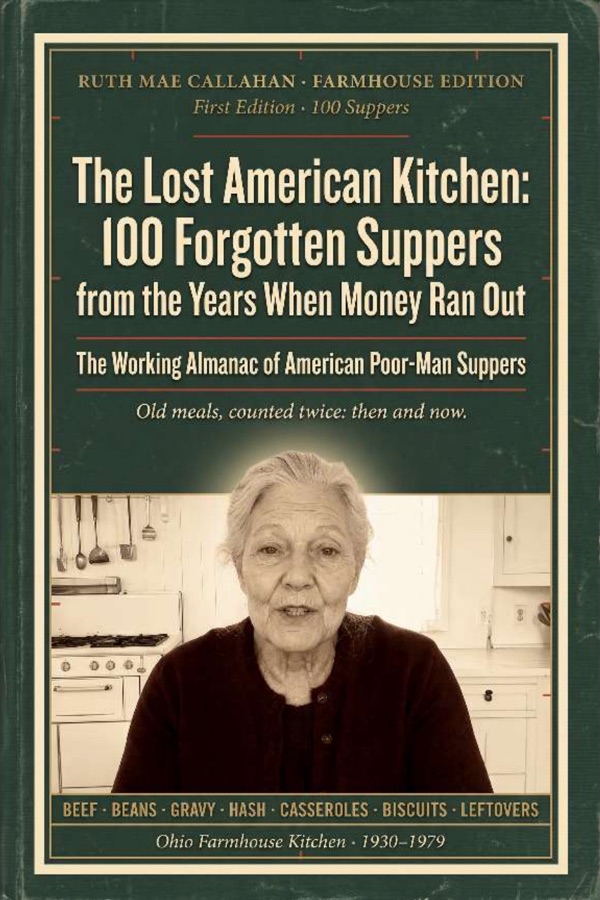
The Lost American Kitchen, Farmhouse Edition — green cloth cover with Ruth Mae Callahan's photograph.
100 suppers 10 chapters 72 pages 1930–1979 Ohio farmhouse kitchen
The arithmetic

Every supper in this book is counted twice.

Not an opinion about inflation. The actual pan, the actual ingredients, priced in the year it was cooked and priced again at today's shelf.

SupperCost thenCost nowMultiple
Beefy bread dressing supper35¢$4.0011×
Beef rice patties38¢$4.0011×
Cabbage beef hash40¢$5.0013×
Hamburger potato soup45¢$5.0011×
Beef and lima beans50¢$5.0010×
Spanish rice with beef55¢$6.0011×
Onion burger supper60¢$7.0012×
Skillet macaroni75¢$8.0011×
Beef and noodles90¢$8.00
Potato-top hamburger pie$1.00$9.00

Ten of the one hundred. Every recipe carries the same two figures — the period price from the year it was cooked, and what the same ingredients cost at a 2026 supermarket.

100
Suppers
10
Chapters
72
Pages
1930–79
Years covered
What is actually in it

Beef, beans, bread, gravy and the good pan.

No celebrity chefs and no restaurant food. These are the suppers that came out of one skillet on a Tuesday, when the pound of beef had to feed six.

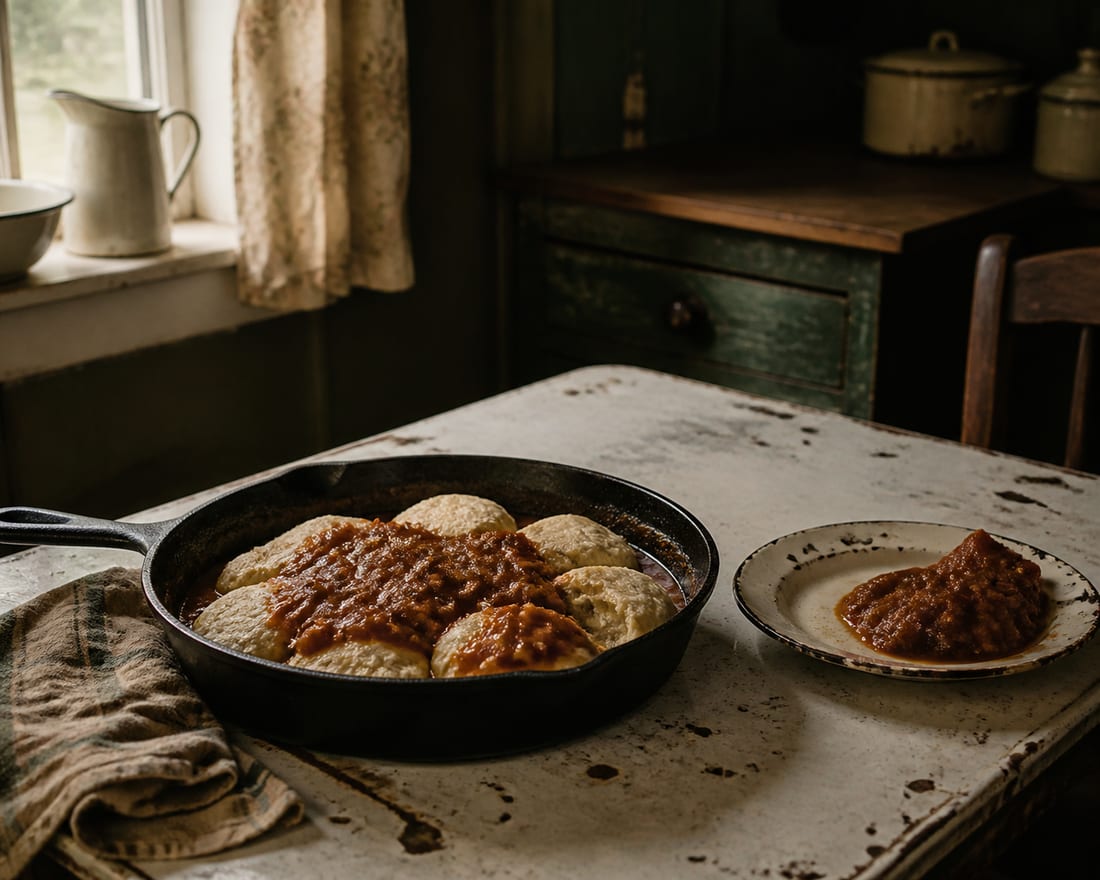
Tomato gravy poured over split biscuits in a cast-iron skillet.
Tomato gravy over biscuits Chapter 4 · then about 20¢ · now $3.00
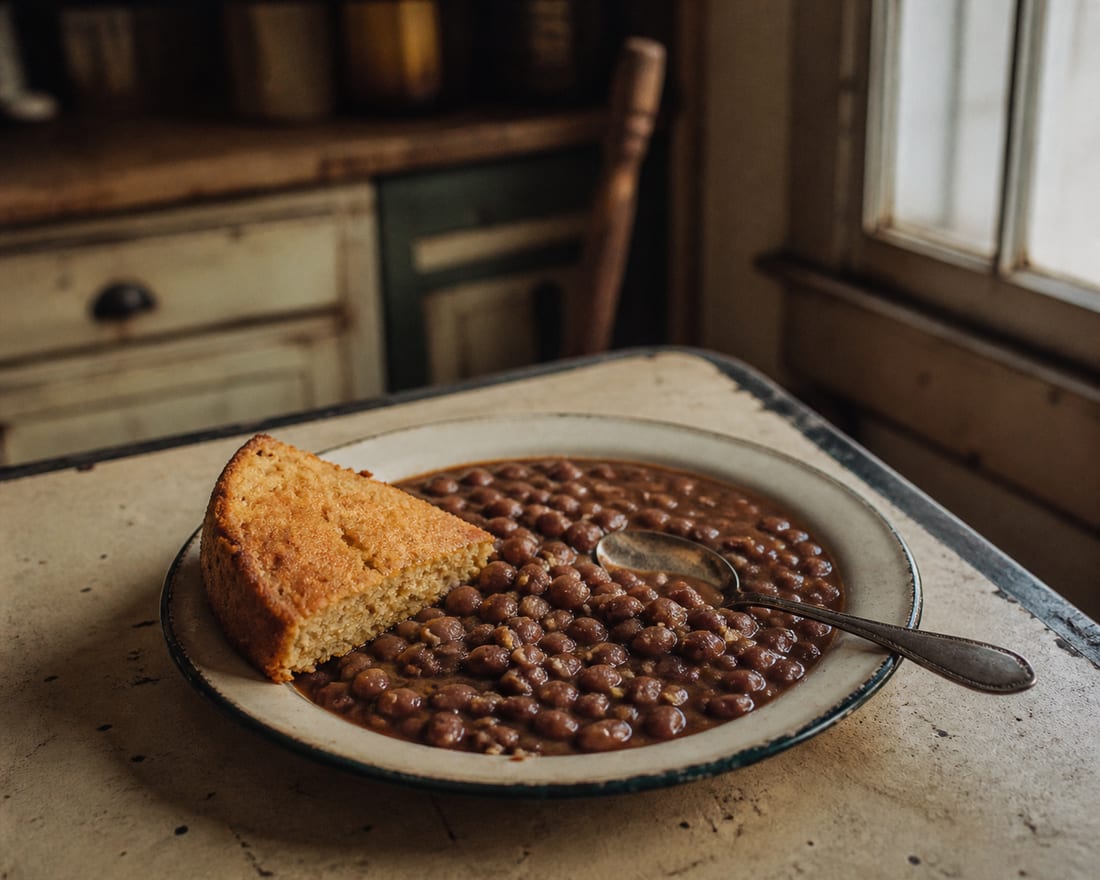
Brown beans and a wedge of cornbread on an enamel plate.
Brown beans and cornbread Chapter 3 · then about 15¢ · now $2.50
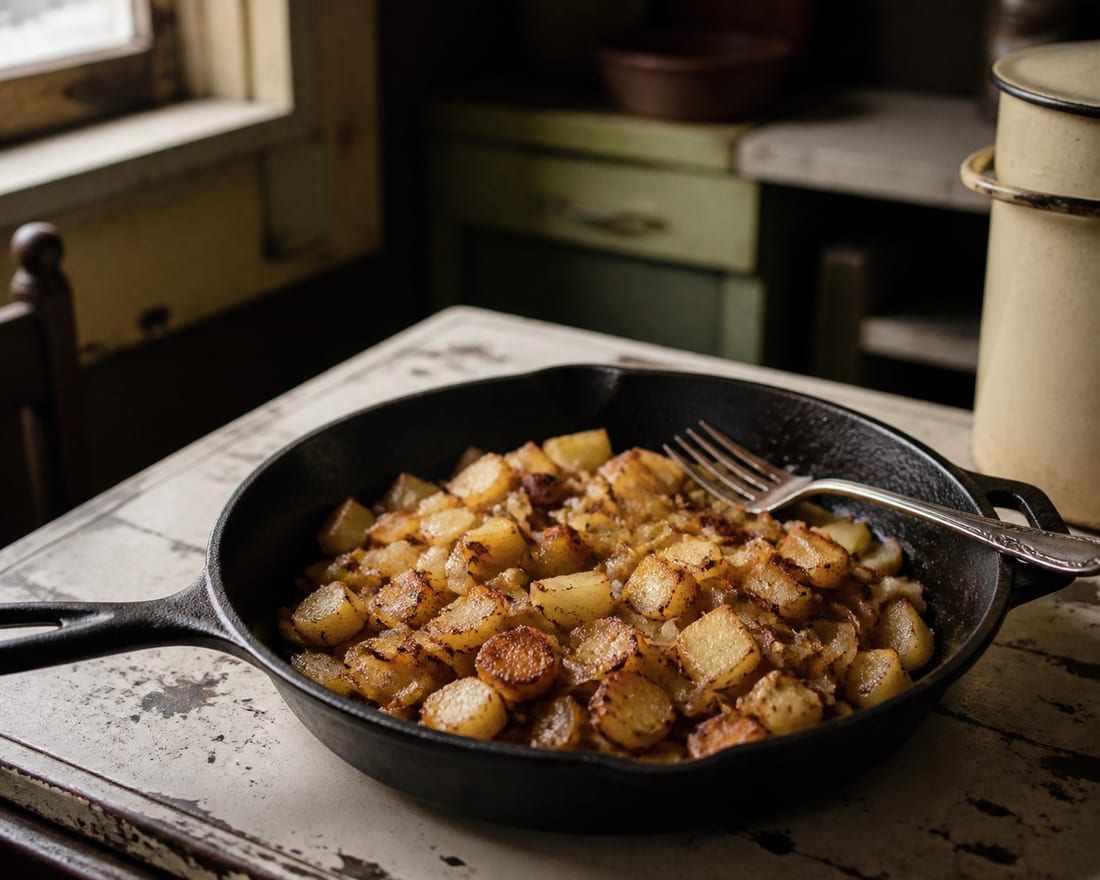
Potato and onion hash browned in a cast-iron skillet.
Cabbage beef hash Chapter 1 · then 40¢ · now $5.00
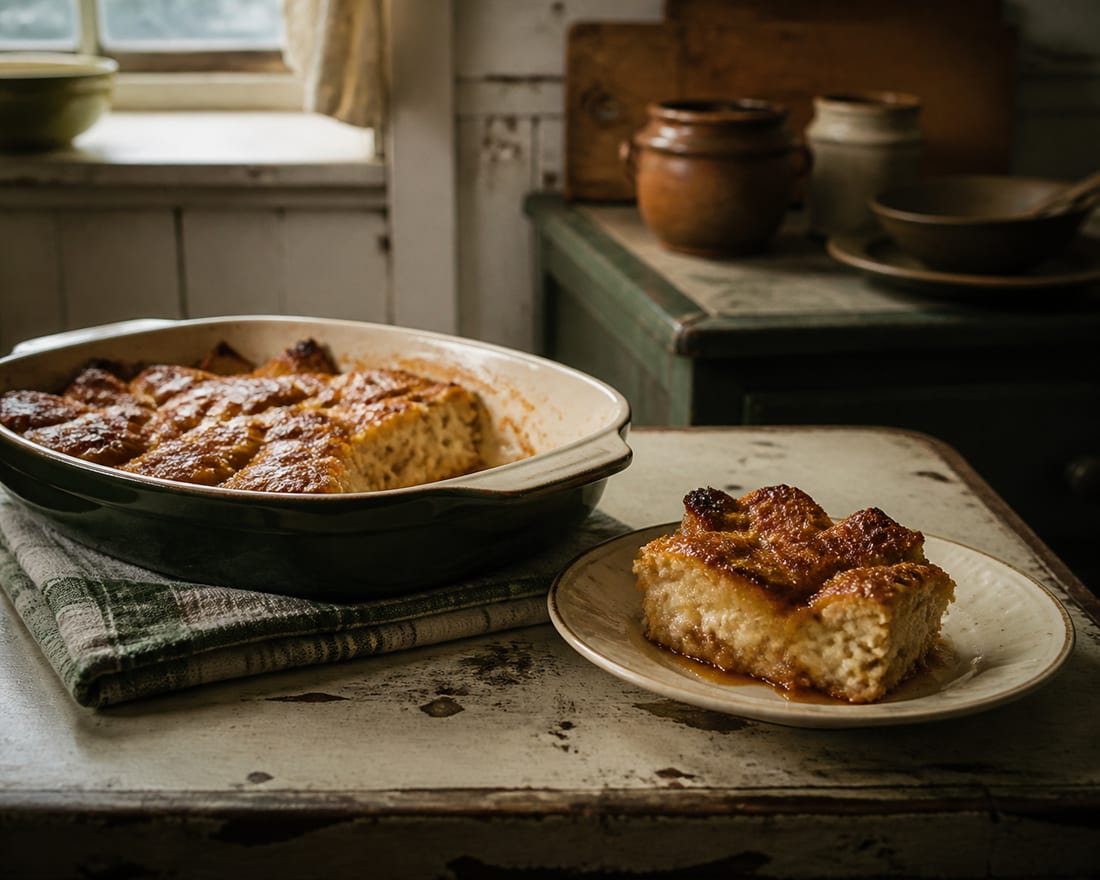
Golden bread pudding in a baking dish with one portion lifted onto a saucer.
Bread pudding Chapter 4 · then about 10¢ · now $2.00

Photographs are modern illustrations of the dishes. The book itself is a typeset almanac — recipes, tables and eleven line drawings.

What it is

Every recipe runs the same shape.

I

What went in it

Real quantities. One pound of beef, one onion, three cups water, one cup cornmeal.

II

How it was made

Plain steps, the pan named. Brown it. Boil. Stir. Cook thick.

III

What it cost then

In the year it was cooked.

IV

What it costs now

Same ingredients, today's shelf.

And a ledger for every chapter

Each chapter closes with a table — supper, main stretcher, pan used, how many it feeds — so you can scan for what is already in your cupboard instead of reading front to back.

"In 1961, I knew what was in the skillet before I knew what day it was. Ground beef, onion, and enough gravy to make it look like a plan."

A page from chapter one

Judge it on a real one.

Printed here exactly as it appears in the book — nothing added, nothing tidied.

Hamburger cornmeal mush
Chapter 1 · Twenty-Five Ground Beef Suppers First

Use one-half pound beef, one onion, three cups water, one cup cornmeal, salt. Brown beef and onion. Boil water. Stir in cornmeal. Add beef. Cook thick.

Then
about thirty cents
Now
about four dollars
Feeds
four to six
Contents

Ten chapters, in the order the money got tight.

I
Twenty-Five Ground Beef Suppers FirstThe skillet stretched. The pound that had to feed six.
II
More Beef When the Pound Was DearOatmeal, crackers, day-old bread soaked in milk.
III
The Depression Thirties PantryWhat was on the shelf when there was no money at all.
IV
Bread Made a MealMilk toast, dressing suppers, gravy over anything.
V
Wartime Ration SuppersCooking around a ration book.
VI
Cans, Gardens, and Company PlatesPutting up, and what you served guests.
VII
The Fifties Stove Did Not WasteThe housewife tricks that never got written down.
VIII
Milk, Gravy, and the Good PanThe cheapest sauces in American cooking.
IX
Sixties Payday Was Still Far OffStretching the last four days of the month.
X
Seventies Budget Suppers and Shopping NowAnd how to buy for these meals today.
Who wrote it

Ruth Mae Callahan.

Ruth Mae Callahan in her Ohio farmhouse kitchen.

Eighty-four. Born 1942. The same Ohio farmhouse kitchen since she married at twenty.

She is not a chef and never worked in a restaurant. She is a grandmother who fed children through years when the money ran short, and who remembers what a pound of ground beef cost, who made a dish, and what it was like to eat it.

Fifteen short first-person notes are scattered through the chapters — a year, a kitchen, one detail. Nothing sentimental.

"I do not romanticize it."

Plainly

What this book is not.

Not in here

  • No modern recipes. Nothing after 1979.
  • No diet or health claims. No food is called healthy or unhealthy.
  • No restaurant food, no celebrity chefs.
  • No lightened-up substitutions. If a recipe used lard, it says lard.
  • No air fryers, no gadgets, no apps.

Honest about its size

  • Seventy-two pages, not seven hundred. One hundred suppers, ten chapters, eleven illustrations, and a ledger at the end of every chapter.
  • A working almanac you keep next to the stove, not a doorstop. Every page carries a recipe or a table.
Order

The Lost American Kitchen

One hundred suppers with the quantities, the method, and both prices. Pay once, yours forever.

$17

Illustrated PDF · 72 pages · read on any phone, tablet or computer
Print it if you like. No app, no subscription.

Get the book — $17

Instant download · 7-day money-back guarantee

VISAMastercardPayPalApple Pay

🔒 Secure checkout via Gumroad

Questions

Before you buy.

How do I get it?

Instantly. Gumroad emails the download the moment payment clears, usually inside a minute. It is a PDF, so it opens on any phone, tablet or computer, and prints on plain paper if you would rather keep it by the stove.

Can I actually cook these today?

Yes — that is the point of the second price. Every recipe lists real quantities and a method in plain steps, and the last chapter covers how to shop for these meals now. The ingredients are ordinary: beef, onion, potatoes, cornmeal, rice, cabbage, bread, milk.

Why are the old prices in there at all?

Because it is the honest measure of what has happened to a grocery bill. A supper that fed six for forty cents costs about five dollars to put on the table now. Both numbers on the same line beat any inflation chart.

Is this a diet or health book?

No. It never calls a food healthy or unhealthy and makes no health claims of any kind. It is a record of what families cooked when money was short.

Seventy-two pages — is that enough?

It is one hundred suppers with no filler. Every page carries a recipe or a chapter ledger. It is deliberately a working almanac rather than a doorstop.

What if it is not for me?

Seven days, no questions asked. Email and the $17 comes back the same day. Keep the book.

Forty cents fed six. Now it's five dollars.

One hundred of those suppers, written down with both numbers, before the people who cooked them are gone.

Get the book — $17

Instant download · 7-day money-back guarantee